
Easter long weekend — four days of chocolate, hot cross buns, family gatherings, and at least one child running through the house screaming about the Easter bunny. It's a lot. And if you've got a dog? It's a lot for them too.
The good news is that Easter is genuinely one of the best holidays to include your dog in. There's outdoor time, there are activities that play to their strengths, and there are ways to make them feel like the most important member of the family — without a single chocolate egg in sight. But there are also more hazards around than you might realise, and a busy, distracted household is exactly when accidents happen.
So consider this your complete Easter guide for dog owners: the fun stuff, the food stuff, and the safety stuff — all in one place.
Easter hazards for dogs: it's not just chocolate
Most dog owners know chocolate is off the menu. But Easter has a surprisingly long list of hazards that often fly under the radar, especially when the house is full of guests and nobody's watching the bench closely.
Chocolate is the obvious one — it contains theobromine, which dogs can't metabolise effectively. Dark chocolate and cocoa powder are the most dangerous, but milk chocolate in larger quantities can cause serious problems too, especially in smaller dogs. If your dog gets into chocolate this Easter, head straight to our full guide: What to do when your dog eats chocolate.
Hot cross buns are genuinely one of the most underestimated Easter dangers. Raisins, currants, and sultanas are all highly toxic to dogs — even a small amount can cause acute kidney failure. This one catches a lot of people out because the toxicity feels disproportionate to the size of the snack. Keep hot cross buns well out of reach and off low tables.
Xylitol is an artificial sweetener found in some sugar-free lollies, chewing gum, and certain peanut butters. It's extremely toxic to dogs — causing a rapid drop in blood sugar and potentially liver failure. Always check labels on anything sweet.
Macadamia nuts — common in Easter gift hampers — can cause weakness, vomiting, tremors, and fever in dogs, even in small amounts.
Easter lilies and other flowers — if you're decorating with fresh flowers this Easter, be aware that many common varieties (including lilies, daffodils, and tulips) are toxic to dogs if chewed or ingested.
Plastic Easter grass and small decorations — the shredded plastic "grass" used in Easter baskets is a real choking and obstruction hazard. If your dog swallows enough of it, it can get tangled in the digestive tract. Same goes for foil wrappers and small plastic egg shells.
The general rule of thumb: if it's festive and at snout height, assume your dog is interested in it.
The Easter egg hunt: how to do it properly for your dog
An Easter egg hunt is actually one of the best activities you can do with your dog — it taps directly into their most powerful sense and gives their brain a serious workout. Mental stimulation is just as tiring as physical exercise for dogs, which means a good scent hunt can be the difference between a calm dog at Easter dinner and a chaotic one.
The key is keeping the dog's hunt completely separate from the family's chocolate egg hunt. Set up two distinct games: one for the kids, one for the pup.
For your dog's version, hide dog-friendly treats around the garden — under bushes, beneath leaves, behind pot plants, inside hollow logs. Keep hiding spots at ground level to start, especially if your dog is new to scent games. Go smelly: cheese, fish treats, or pieces of Doggy Grub fresh meals work brilliantly because the stronger the smell, the more satisfying the find.
You can hide treats inside coloured plastic eggs for an extra layer of challenge (dogs see blue and yellow best, so lean into those shades). If your dog is a dedicated chewer who'd crunch through the plastic in seconds, a stuffed Kong is a better option.
For the full step-by-step guide to setting up the ultimate dog Easter hunt — including a scent-only version that uses no treats at all — check out our dedicated post: How to create a safe Easter hunt for your dog.
What to feed your dog at Easter (and what to absolutely avoid)
Easter is a time when well-meaning guests, kids, and relatives are all very keen to share their food with the dog. It helps to have a clear answer ready for when someone inevitably asks "can I give them a bit of this?"
Safe Easter foods for dogs:
- Carrot sticks — a brilliant crunchy snack and a great Easter-themed treat (the Easter bunny approves)
- Cooked plain sweet potato
- Blueberries and banana slices
- Apple pieces (no seeds or core)
- Plain cooked chicken or turkey — no seasoning, no onion, no garlic
- Carob — the dog-safe chocolate alternative. It's naturally sweet, contains no theobromine, and is available in chip or powder form at most health food stores. You can bake it into dog treats or use it to make your pup their very own Easter "chocolate" eggs
Foods to absolutely avoid:
- Chocolate (all types — dark, milk, white, baking)
- Hot cross buns and anything containing raisins, sultanas, or currants
- Anything with xylitol
- Macadamia nuts
- Onion and garlic (common in roast marinades and stuffings)
- Grapes
- Cooked bones — they splinter and can cause internal damage
- Alcohol (sounds obvious, but wine and beer on the lawn happen)
Other ways to include your dog in Easter celebrations
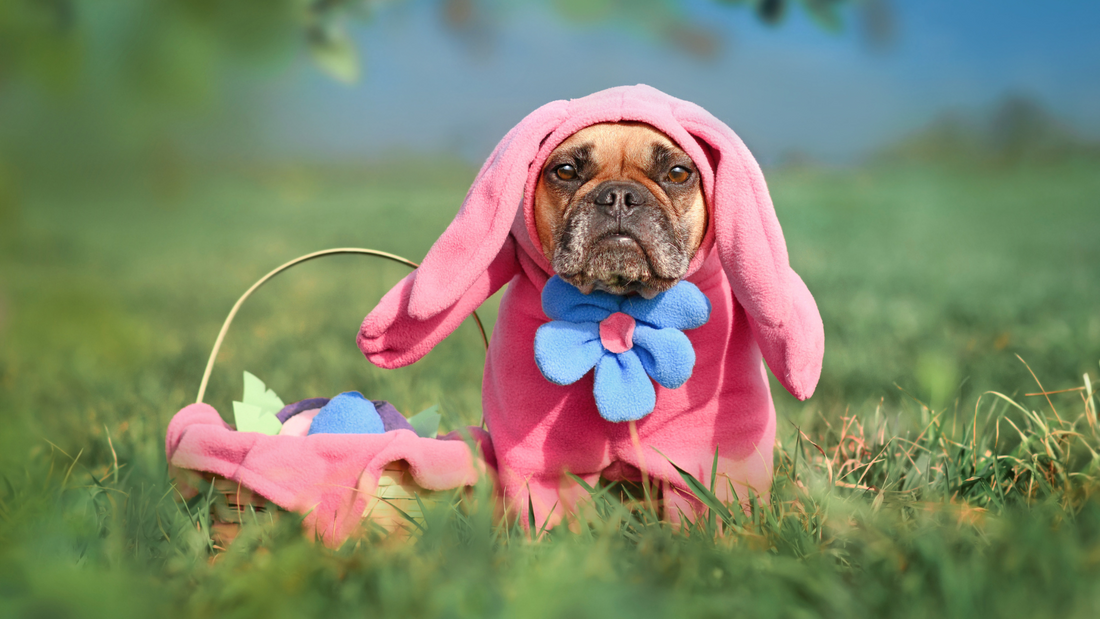
The Easter parade walk: Grab a bunny ear headband or a pastel bandana and take your pup for a slightly more festive than usual morning walk. It's silly, it's fun, and the photos are outrageously good. Tag us on Instagram @doggy_grub — we genuinely love seeing these.
Easter photoshoot: Natural light, a basket of (dog-safe) treats, and a patient dog = the best Easter content you'll ever post. Bribe accordingly.
Backyard hang: If the family is gathering outside, set your dog up with a long-lasting chew or a stuffed Kong so they can be part of the action without being underfoot during lunch. A tired, occupied dog is a good dog.
Easter treat baking session: Carob and peanut butter dog biscuits shaped like Easter eggs are embarrassingly easy to make and your dog will act like you've handed them the greatest gift of all time. A quick search will bring up dozens of recipes — just double-check every ingredient is dog-safe before you start.
If something goes wrong
Even the most prepared households have incidents. If your dog eats something they shouldn't this Easter, the key is to act fast and not wait to see how things develop.
Animal Poisons Helpline (Australia): 1300 869 738 — available 24/7, staffed by vets, and completely worth saving in your phone right now.
Want to be the first to get your paws onto the hottest topics? Subscribe to our newsletter!
--------------------------------------------------------------------
The Doggy Grub blog is dedicated to helping dogs and their owners achieve happier, healthier lives, changing the way we feed our dogs one bowl at a time! If you would like to know more about our fresh food head to Doggy Grub


