
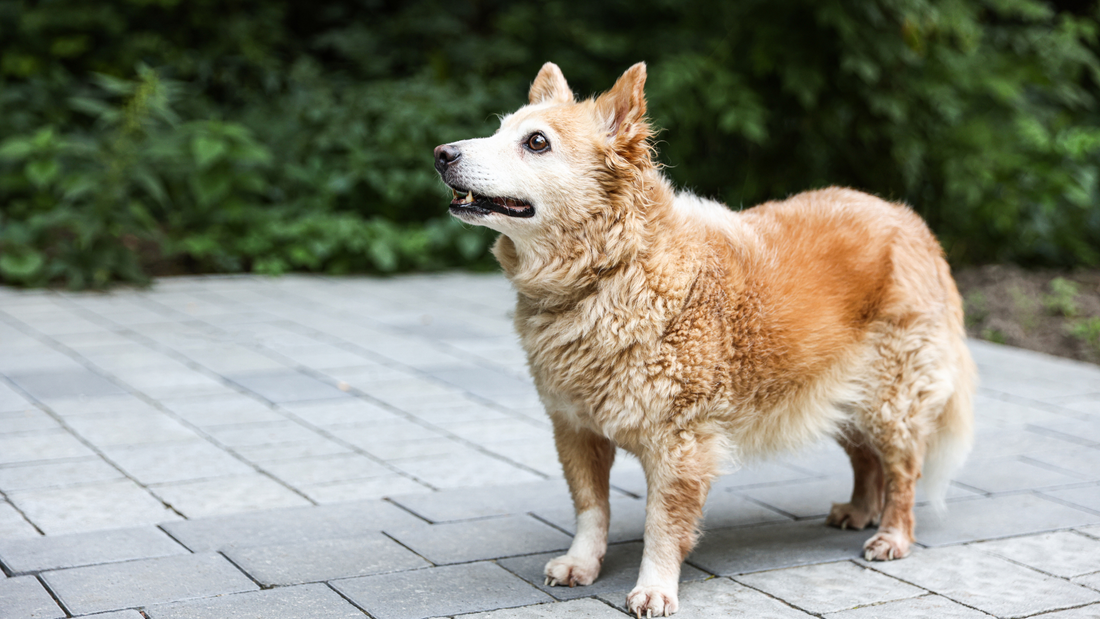
We know, we know — not the most cheerful way to start an article. But stick with us, because there's actually really good news hiding in that sentence.
If joint damage builds slowly, so does joint protection. Every small thing you do for your dog's joints adds up over time, and the earlier you start, the bigger the difference you'll see. So rather than waiting for a problem to show up, let's get ahead of it together.
When Does "Senior" Actually Start?
This is one of our favourite things to share because it genuinely surprises most people. "Senior dog" doesn't mean the same age across all breeds — not even close.
For giant breeds like Great Danes, Bernese Mountain Dogs, and Rottweilers, the senior life stage kicks in around 5 years old. Five! That dog is still acting like a complete goofball. For medium and large breeds it's closer to 7, and for smaller dogs it's usually 8 to 10.
So if you've got a Great Dane, joint support is worth thinking about before their fourth birthday — not their ninth. Once you know this, it changes how you approach the whole thing, and it feels a lot less daunting when you're starting early rather than playing catch-up.
What's Actually Going On Inside Your Dog's Joints?
Think of your dog's joints like a well-oiled door hinge. Cartilage is the cushioning between the bones, synovial fluid keeps everything moving smoothly, and tendons and ligaments hold the whole thing together. When everything's working well, it's pretty seamless.
The trouble starts when years of low-grade inflammation, extra weight, and a diet that doesn't quite support them begins to quietly wear that cushioning down. That's when things like canine osteoarthritis and hip dysplasia can creep in — and movement that was once effortless starts to feel uncomfortable.
The really encouraging part? A lot of what drives that inflammation is stuff you can actually influence. And it starts with what's in the bowl.
The Kibble Conversation (We Promise We're Not Here to Judge)
Dry food isn't evil, and we'd never make anyone feel bad for feeding it — life is busy and kibble is convenient. But since we're talking joints, it's worth understanding what happens during the manufacturing process, because it genuinely matters.
Kibble is made through something called extrusion — ingredients get blasted with high heat and pressure to form those little pellets. That process creates compounds called AGEs. Complicated name, but simple idea: they're damaged molecules that form when sugars and proteins get fused together under extreme heat. Think of what happens to food when it gets overcooked and goes stiff and crusty — those same kinds of hardened, sticky compounds end up inside your dog's body, accumulating in tissues over time, triggering inflammation, and speeding up the ageing process.
Then there's the fat balance. A lot of processed food is heavy on omega-6 fats and lighter on omega-3s. Omega-6s aren't bad on their own — they actually support heart, brain, and skin health — but when they're way out of proportion, the body tips into a state of ongoing low-level inflammation. Nothing dramatic, nothing immediately obvious, just a slow daily burn that adds up over time.
And then there's weight. Kibble is calorie-dense, low in moisture, and pretty easy to overfeed — which is a big reason why dogs on dry food diets are more prone to carrying extra condition. Those extra kilos put real stress on hips, knees, elbows, and the spine every single day, and excess weight is one of the most well-documented risk factors for dog joint pain and arthritis. The good news is it's also one of the most fixable — switching to fresh food, focusing on gut health, building a gentle exercise routine, and adding raw meaty bones to the diet can all help dogs shed what doesn't need to be there and feel so much better for it.
Real Food Does the Opposite
Fresh food — whole ingredients, no high-heat processing, no mystery fillers — works the other way around. More moisture keeps cartilage and connective tissue hydrated. A better natural fat profile dials down inflammation. Cleaner ingredients make it genuinely easier to manage your dog's weight without playing guessing games.
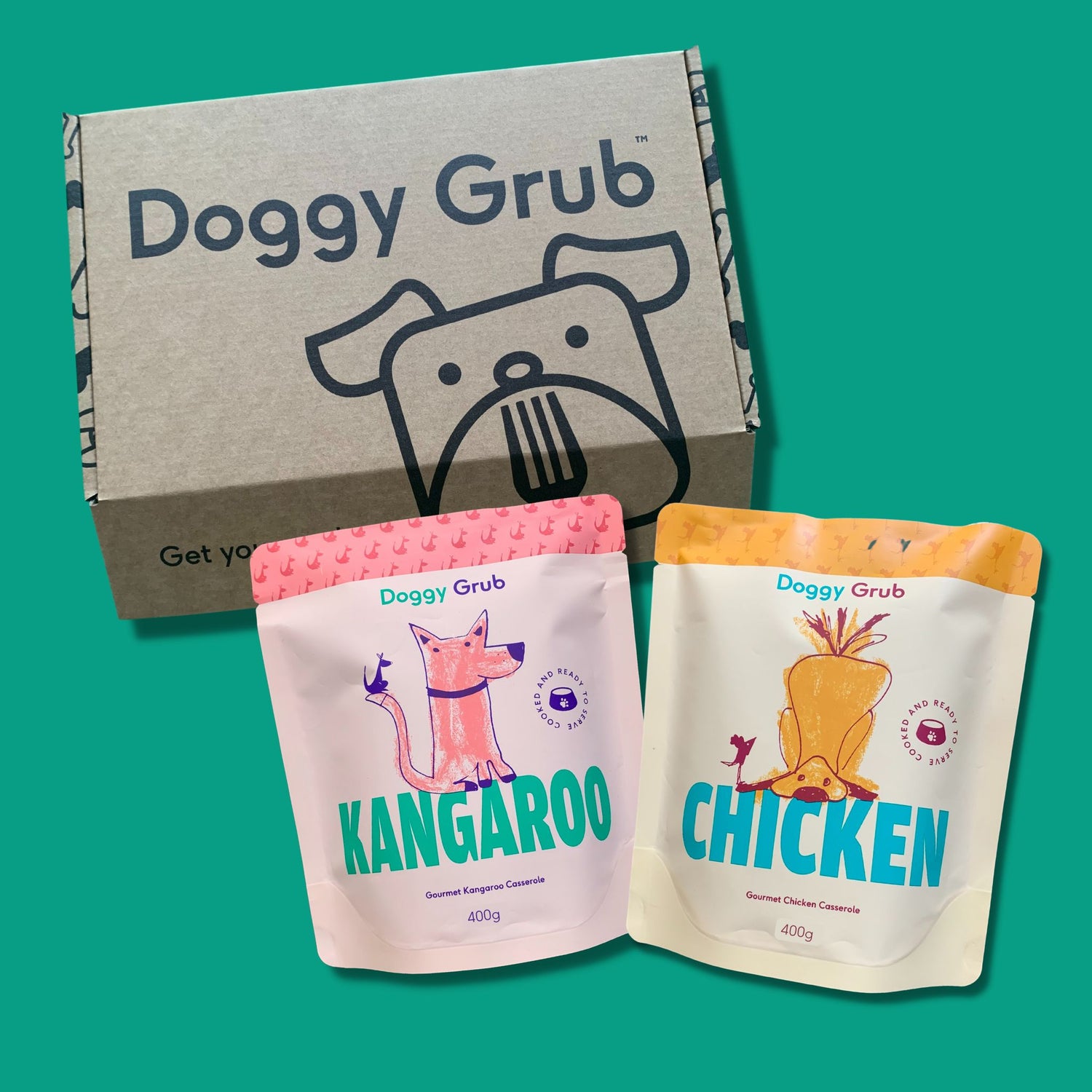
That's the whole idea behind Doggy Grub. Real food you can actually recognise, put together in a way that works with your dog's body rather than quietly against it.
The Whole Foods Worth Adding to your Senior Dog's Bowl
No pharmacy degree required, we promise. The most effective approach is just building good habits in layers — start simple and add from there.
Start with oily fish — sardines, salmon, mackerel, and fish skins (brilliant for smaller dogs) are your foundation. They're rich in EPA and DHA, the omega-3 fatty acids with the strongest research behind them for reducing joint inflammation and slowing cartilage breakdown. Rotating between sources is a great idea — sardines one day, salmon the next, a little variety keeps things interesting for your dog too. If oily fish doesn't sit well with your pup (our rescue Betty couldn't stomach them), a quality omega-3 oil (fish or algae-based) is a brilliant alternative.
Add collagen-rich foods — chicken feet, duck feet, beef tendons, bone broth. Not the prettiest additions to a meal, but genuinely some of the most useful things you can put in the bowl. They give your dog the raw building blocks for cartilage, tendons, and ligaments. Bone broth as a daily meal topper is honestly one of the easiest habits to build, especially for seniors.
Layer in the anti-inflammatory extras — turmeric with black pepper is a classic combo for good reason. Black pepper makes the active compounds in turmeric up to 20x more absorbable, which is why golden paste works so much better than just sprinkling powder on the food. Blueberries, leafy greens, broccoli sprouts, and functional mushrooms round out a really solid anti-inflammatory toolkit.
For more targeted joint support, a few supplements are worth knowing about:
- Green-lipped mussel powder — a unique combination of omega-3s, glycosaminoglycans, and antioxidants that's been studied specifically for managing arthritis in dogs. A real standout for aging dogs.
- Chondroitin (found in shark cartilage) — helps maintain the cartilage that cushions joints and slows the breakdown that comes with age.
- UC-II collagen — works differently to regular collagen. Rather than just providing building blocks, it helps modulate the immune response that drives cartilage breakdown in arthritic joints.
- CBD oil — still emerging in terms of dog-specific research, but increasingly used as part of a joint support routine for managing discomfort in dogs with arthritis.
If you've got a senior dog and the idea of sourcing all of this separately feels a bit overwhelming, Grinkles for Wrinkles brings together green-lipped mussels, turmeric, black pepper, chondroitin, and kangaroo — a lean, naturally anti-inflammatory protein — in one easy blend. We made it because we wanted something that actually covered the bases without the faff.
None of this works overnight, and that's completely fine — it builds over weeks and months. Which is exactly why starting before things become a problem is such a lovely position to be in.
Move Them Gently & Consistently.
Joints need movement to stay healthy, and the muscle around them is what keeps them stable and protected. Lose that muscle — which can happen faster than you'd think in senior dogs — and the joint loses its cushioning. Consistent, low-impact daily movement is one of the best things you can do, and it really doesn't need to be intense to make a difference.
Short and often really does beat long and occasional:
- Puppies — gentle walks and free play. Skip the long runs for now; in large and giant breeds, growth plates don't fully close until 18–24 months, and overloading them early can cause issues down the line.
- Adolescents — structured walks, swimming, varied terrain. Around 45–90 minutes a day across a couple of sessions works well.
- Adults — 60–120 minutes daily. Hill walks are brilliant for building the joint-protecting muscle around hips and knees.
- Seniors (7–8+ for most breeds, 5+ for giant breeds) — shorter and more frequent. 30–60 minutes total across multiple outings. Sniff walks absolutely count. Let them lead the pace — they'll tell you what feels good.
- Dogs with arthritis or hip dysplasia — 10 minutes, three times a day is a wonderful starting point. Gentle and consistent is the name of the game. If they seem stiffer the next morning, just ease back a little and check in with your vet. Daily massage is also a beautiful habit to build — brilliant for their joints and a really special bonding moment too.
A simple way to gauge it: your dog should finish a walk feeling better than when they started. If they don't, just adjust — no stress, you'll find the sweet spot.
The Bit Worth Actually Remembering
Arthritis in dogs and joint degeneration aren't inevitable — but they are progressive, and they're quiet about it. The damage doesn't announce itself until it's already well underway, which is exactly why getting ahead of it feels so much better than playing catch-up.
Know your breed, know when their senior years actually begin, and start before there's a problem staring you in the face. Real food, consistent movement, the right stuff added to the bowl early — none of it is complicated, it just needs to happen before you feel like you need it to.
Want to be the first to get your paws onto the hottest topics? Subscribe to our newsletter!
---------------------------------------------------------------------------
The Doggy Grub blog is dedicated to helping dogs and their owners achieve happier, healthier lives, changing the way we feed our dogs one bowl at a time! If you would like to know more about our fresh food head to Doggy Grub


