

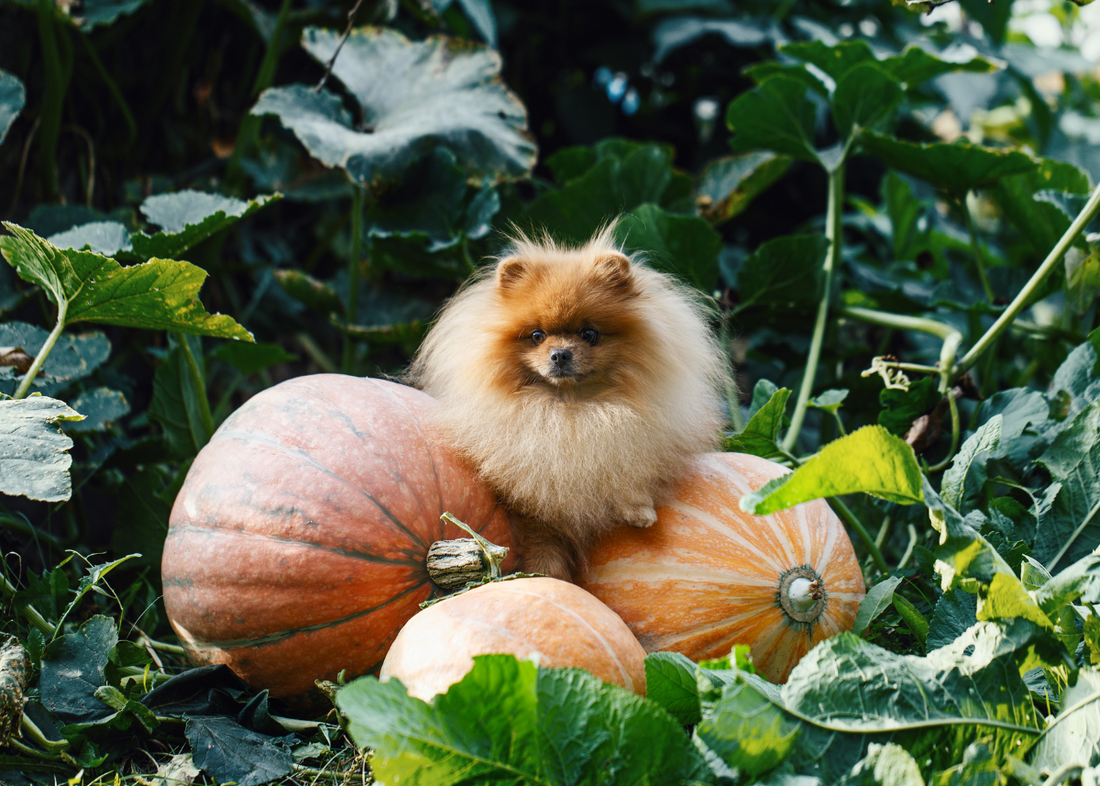
It's October. The internet is doing its annual pumpkin thing — the lattes, the candles, the whole aesthetic — and yes, we're based in Australia where it is absolutely, definitely spring and not autumn. We are aware.
But here's the thing: pumpkin doesn't care what season it is. It's available in Australian supermarkets all year round, it costs almost nothing, and it's genuinely one of the most useful whole foods you can add to your dog's regular meals. So while the northern hemisphere is carving jack-o'-lanterns, we're over here with our dogs eating the stuff instead.
Here's everything you need to know.
Can Dogs Eat Pumpkin? Quick Reference Guide
| Can dogs eat pumpkin? | ✅ Yes — one of the safest, most beneficial vegetables for dogs |
| Can dogs eat pumpkin every day? | ✅ Yes, in appropriate amounts |
| Raw or cooked? | Both fine — cooked and plain is easiest |
| Can dogs eat pumpkin seeds? | ✅ Yes — raw, unsalted, and ideally ground |
| Can dogs eat pumpkin skin? | ⚠️ Best avoided — hard to digest |
| Best form | Plain cooked pumpkin or canned pumpkin puree (unsweetened, not pie filling) |
| Daily amount (small dog) | 1 teaspoon |
| Daily amount (medium dog) | 1–2 tablespoons |
| Daily amount (large dog) | 2–4 tablespoons |
Is Pumpkin Good for Dogs?
Yes — and it's one of those foods where the benefits are broad enough that it's useful for almost any dog, regardless of age, size, or health status. It's high in fibre, low in calories, packed with vitamins and antioxidants, and most dogs genuinely like the taste. It's not a miracle food, but it's about as close to a straightforward win as you get in dog nutrition.
Benefits of Pumpkin for Dogs
Pumpkin for Dog Digestion
This is the one most people know about, and it's well-earned. Pumpkin is rich in soluble fibre, which absorbs water and bulks up stools — making it useful for loose stools and diarrhoea. But it also contains insoluble fibre, which softens hard stools and helps with constipation. It basically works in both directions, which makes it unusual among natural remedies.
If your dog has an upset stomach or you're transitioning them to a new food, a spoonful of pumpkin puree stirred through their meal is one of the most reliable things you can do. Vets recommend it for a reason.
Pumpkin for Weight Management
Pumpkin is about 90% water and very low in calories, which means it adds volume to a meal without adding much in the way of energy. For dogs who need to lose weight or who are always acting like they're on the verge of starvation (looking at you, Labradors), adding pumpkin to their bowl helps them feel fuller without the extra calories.
Vitamins & Antioxidants
Pumpkin is high in beta-carotene — the orange pigment that converts to Vitamin A in the body — as well as Vitamin C, Vitamin E, and potassium. These support immune function, skin and coat health, and overall cell health. The antioxidants help protect against free radical damage, which matters more as dogs age.
Pumpkin Seeds for Dogs
Pumpkin seeds deserve their own mention. They contain cucurbitacin, a compound with natural antiparasitic properties — there's some evidence that pumpkin seeds can help expel intestinal worms, though they shouldn't replace veterinary treatment for an active infestation. They're also a good source of zinc, magnesium, and healthy fats.
Serve them raw and unsalted, ideally ground into a powder and sprinkled over food. Whole seeds are fine for larger dogs but could be a choking hazard for small ones.
Joint Health
Pumpkin seeds contain natural anti-inflammatory compounds and antioxidants, including omega-3 fatty acids, that may help reduce joint inflammation. For older dogs or breeds prone to joint issues, it's a nice addition alongside more targeted support.
Can Dogs Eat Canned Pumpkin?
Yes — and it's actually one of the most convenient options. Look for 100% pure pumpkin puree with no added ingredients. The one to avoid is pumpkin pie filling, which contains sugar, spices, and sometimes xylitol — none of which belong in a dog's bowl.
Plain canned pumpkin keeps in the fridge for a few days once opened, or you can freeze it in ice cube trays and add a cube to meals as needed. Genuinely useful to have on hand.
Can Dogs Eat Raw Pumpkin?
Yes, raw pumpkin is safe for dogs, though it's harder to digest than cooked. If you're serving it raw, grate or puree it rather than giving chunks. Most dogs will find cooked pumpkin more palatable anyway.
How Much Pumpkin Should I Give My Dog?
Start small and build up — pumpkin is high in fibre, and too much too soon can actually cause the digestive issues you're trying to solve.
| Dog size | Starting amount | Daily maintenance |
|---|---|---|
| Small (under 10kg) | ½ teaspoon | 1 teaspoon |
| Medium (10–25kg) | 1 teaspoon | 1–2 tablespoons |
| Large (25kg+) | 1 tablespoon | 2–4 tablespoons |
Plain cooked pumpkin or canned puree stirred through their regular food is the simplest approach. Most dogs take to it immediately.
Pumpkin Dog Treat Recipe: Pumpkin & Peanut Butter Biscuits
These are genuinely easy, freeze well, and will make your kitchen smell like a bakery — which is either a selling point or a problem depending on how you feel about pumpkin.
Makes approximately 30 biscuits
Ingredients:
- 1 cup plain pumpkin puree (tinned or freshly cooked and mashed)
- ¼ cup natural peanut butter (unsalted, xylitol-free — check the label)
- 2 eggs
- 2½ cups whole wheat flour (or oat flour for a gluten-free version)
- ½ teaspoon cinnamon (optional — safe for dogs in small amounts)
Method:
- Preheat your oven to 180°C and line two baking trays with baking paper.
- Mix the pumpkin puree, peanut butter, and eggs together in a large bowl until combined.
- Add the flour gradually, mixing until a firm dough forms. If it's too sticky, add a little more flour a tablespoon at a time.
- Roll the dough out on a lightly floured surface to about 1cm thickness. Cut into shapes — pumpkins if you're going all in on the theme, bones if you'd rather not commit.
- Bake for 20–25 minutes until golden and firm. They should feel dry to the touch when done.
- Cool completely before serving — they firm up further as they cool.
- Store in an airtight container for up to a week, or freeze for up to 3 months.
Note: These are treats, not a meal replacement. A couple a day for a medium dog is plenty.
Spring has officially arrived in Australia, but pumpkin doesn’t need to wait until October for a comeback. If your dog enjoys it, there’s plenty of reason to keep it on the menu — from supporting digestion and healthy weight to making mealtimes a little more exciting.
Basically: pumpkin doesn’t care what season it is. Neither should you.
Want to be the first to get your paws onto the hottest topics? Subscribe to our newsletter!
--------------------------------------------------------------------
The Doggy Grub blog is dedicated to helping dogs and their owners achieve happier, healthier lives, changing the way we feed our dogs one bowl at a time! If you would like to know more about our fresh food head to Doggy Grub


